Review: Valentine Highland Cow Floral Tumbler Design
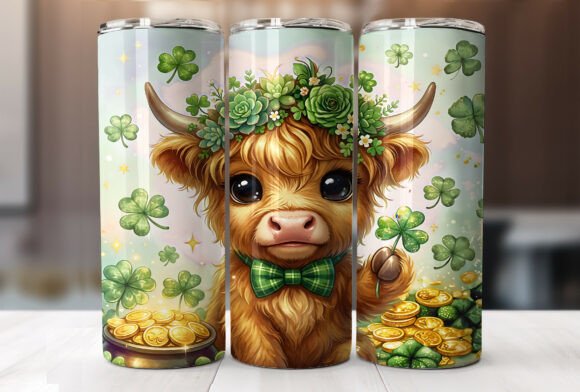
As a designer who spends more time staring at stitch maps than most people care to admit, I approach every new digital embroidery file with a mix of curiosity and skepticism. When I first pulled up the Valentine Highland Cow Floral Tumbler on my screen, my initial reaction wasn't just about the cuteness factor—though let's be honest, that Highland cow aesthetic is having a major moment. My first thought was practical: how will this translate from a high-resolution graphic into actual thread? This isn't just a pretty picture; for those of us running a craft business or selling on Etsy, it's a potential small shop product that needs to hold up under scrutiny.
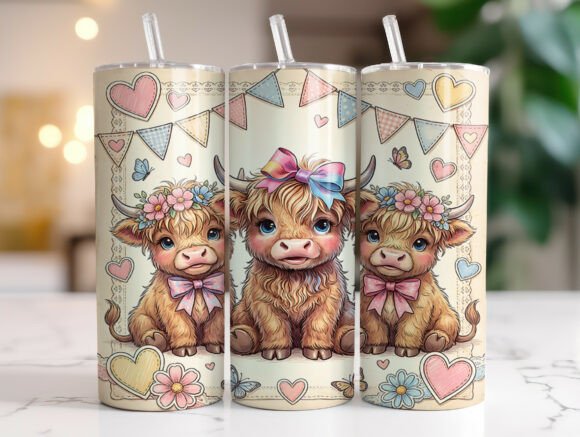
The design itself exudes a specific mood. It blends rustic charm with romantic flair, perfect for the upcoming holiday season. The layout features the iconic shaggy cow surrounded by floral elements, creating a visual personality that feels both whimsical and grounded. For an embroidery project, this kind of thematic blending is gold. It appeals to a wide demographic, from teenagers looking for trendy custom apparel to adults seeking unique personalized gifts. However, seeing it as a PNG intended for tumbler wraps raises an interesting challenge for us stitchers. We aren't wrapping tumblers with thread; we are stitching onto fabric. So, the real question is: how do we adapt this Graphics-heavy concept into a viable machine embroidery design?
Adapting Tumbler Graphics for Stitched Reality
Let's talk about a real-life scenario. Imagine a client comes to you wanting a custom tote bag for their daughter's Valentine's Day party. They show you the Valentine Highland Cow Floral Tumbler image they found online and say, "I want this exactly." As the professional, you know that a 9.3″ x 8.2″ printable graphic doesn't automatically equal a stitch-ready file. If you were to treat this purely as a reference for creating a custom digitization, the level of detail in the flowers and the cow's fur would require careful planning.
In a real production environment, this design shines when scaled correctly. For a sweatshirt embroidery project, the larger surface area allows you to capture the nuance of the floral arrangement without losing definition. You could use a combination of satin stitch for the bold outlines of the cow and the text (if included in your digitized version), and fill stitch for the flower petals to give them texture. The contrast between the rough texture implied by the Highland cow's coat and the softness of the flowers creates a dynamic finished product that feels premium.
However, if you are considering this for smaller items like a baby embroidery project on a onesie or a pocket on a cap, you need to be cautious. The intricate details of the original graphic might turn into a muddy mess if the stitch density is too high or if the scale is too small. In these cases, simplifying the floral elements or increasing the size of the key features becomes necessary to maintain stitching clarity.
Fabric Choices and Technical Considerations
One of the biggest hurdles with designs inspired by Tumbler Wraps is that they are often designed for smooth, curved surfaces, not textured fabrics. When moving this concept to textiles, the fabric texture plays a massive role. A smooth cotton twill or a tight-knit polyester blend will yield the best results, allowing the thread colors to pop and the edges to remain crisp. If you attempt this on a fuzzy fleece or a stretchy jersey without proper stabilization, the definition of the Highland cow's eyes or the delicate petals could get lost.
Speaking of stabilization, this is non-negotiable. Given the likely density required to render the cow's fur and the floral details, using a high-quality cut-away stabilizer is essential, especially for garments that will undergo frequent washing. A tear-away might suffice for a decorative wall hanging or a pillow cover that sees little action, but for custom apparel like t-shirts or aprons, you need that permanent support to prevent puckering over time.
Color selection is another critical factor. The original graphic likely uses vibrant, saturated hues suitable for printing. In embroidery, we are limited by our thread chart. You must check thread color contrast carefully. Does the dark brown of the cow blend too much with a navy background? Do the pinks of the flowers disappear against a light pink garment? Testing your design on scrap fabric in both light and dark variations is a step I never skip. It saves you from unraveling hours of work later.
Commercial Viability and Brand Consistency
For Etsy sellers and creative entrepreneurs, the Valentine Highland Cow Floral Tumbler concept offers strong commercial potential, provided it is executed well. The "Highland Cow" niche is evergreen, and adding a Valentine's twist makes it seasonal without being disposable. Customers love items that feel handmade yet professional. A well-stitched version of this design on a high-quality tote bag or a boutique hoodie can command a higher price point because of its perceived value.
Visual appeal directly impacts buyer engagement. When a customer sees a clean, well-defined embroidered patch or a chest logo on a sweatshirt, it builds trust. It signals that the maker cares about quality. Conversely, a design that looks pixelated due to poor scaling or has thread breaks due to excessive density can damage your reputation. Therefore, treating this graphic as a serious design asset means respecting the limitations of the medium.
If you are using this as inspiration for a digital product, such as selling mockups or pre-digitized files, ensure you clarify the licensing terms. The source material mentions it is a printable PNG, which typically implies rights for printing, not necessarily for redistributing as an embroidery file. Always confirm licensing before selling commercial embroidery products derived from third-party graphics.
Practical Notes for the Working Designer
Before you commit this design to a client's garment, here is my checklist for ensuring success:
- Test on Scrap First: Never stitch a new design directly on the final product. Use the same fabric and stabilizer combination you plan to use for the job.
- Check Hoop Size: Ensure your machine's hoop size can accommodate the dimensions you need. While the graphic is roughly 9 inches, you might need to scale it down to fit a standard 5x7 or 6x10 hoop, which affects detail retention.
- Inspect Small Details: Look closely at the tiny leaves and the cow's eyelashes. In embroidery, these often need to be thickened or simplified compared to the print version to stitch out cleanly.
- Mockup in Black and White: Convert your reference image to grayscale. This helps you see if the contrast holds up without relying on color differentiation.
- Verify File Formats: Remember, the source is a PNG. You cannot load a PNG directly into most embroidery machines as a stitch file. You will need to digitize it yourself or hire a digitizer to convert it into a proper embroidery file format compatible with your machine.
- Consider the Application: Think about where it will live. Is it an embroidered patch meant to be ironed on? Or direct-to-garment? The backing and finish will differ significantly.
In conclusion, the Valentine Highland Cow Floral Tumbler is a charming concept with excellent potential for the right handmade product. It bridges the gap between trendy digital aesthetics and traditional craft. However, its success relies entirely on the skill of the maker to adapt a print-ready graphic into a robust, stitchable reality. By paying attention to fabric choice, stabilization, and scale, you can turn this cute graphic into a standout piece for your holiday embroidery collection or year-round boutique offerings. Just remember, in our world, the devil—and the delight—is in the details.